
A Seed Bank for Lānaʻi: Kuahiwi a Kai’s Restoration Work Continues
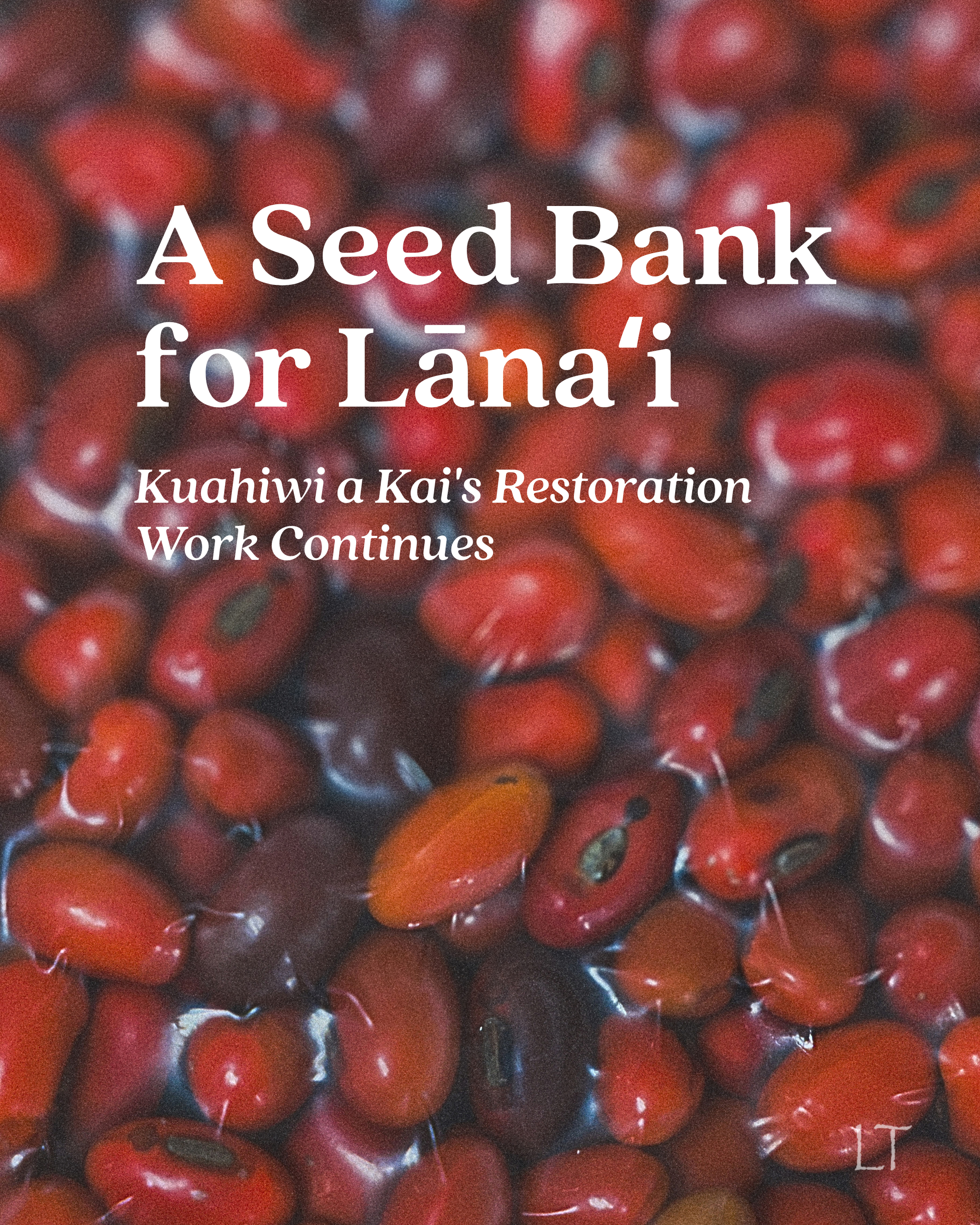
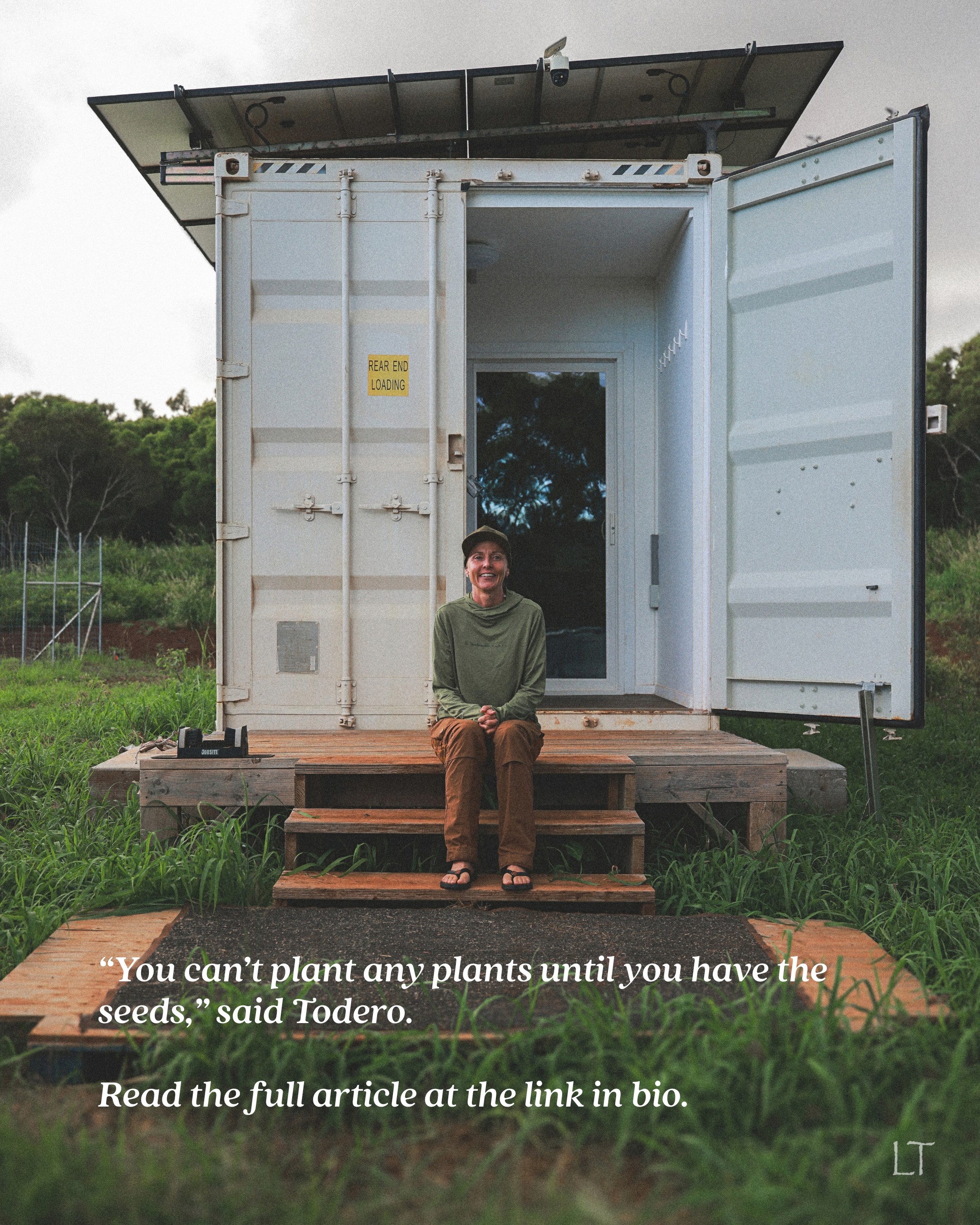
“You can’t plant any plants until you have the seeds,” said Lehua Todero, seed bank manager for native forest restoration company Terraformation.
On Lānaʻi, that supply now numbers in the millions. Founded in 2020 and based on Hawaiʻi Island, Terraformation helps restore native forests in Hawaiʻi and internationally, supplying restoration teams with seeds, equipment, training and technology.
Its work here supports the Kuahiwi a Kai: Lānaʻi Watershed Conservation Program, established in 2019 by the National Fish and Wildlife Foundation (NFWF) and Pūlama Lānaʻi. Through an NFWF grant, Terraformation began working with Pūlama Lānaʻi to establish a native seed bank and regular collection program. Both organizations collect and store seeds, with Pūlama Lānaʻi handling propagation for future planting.
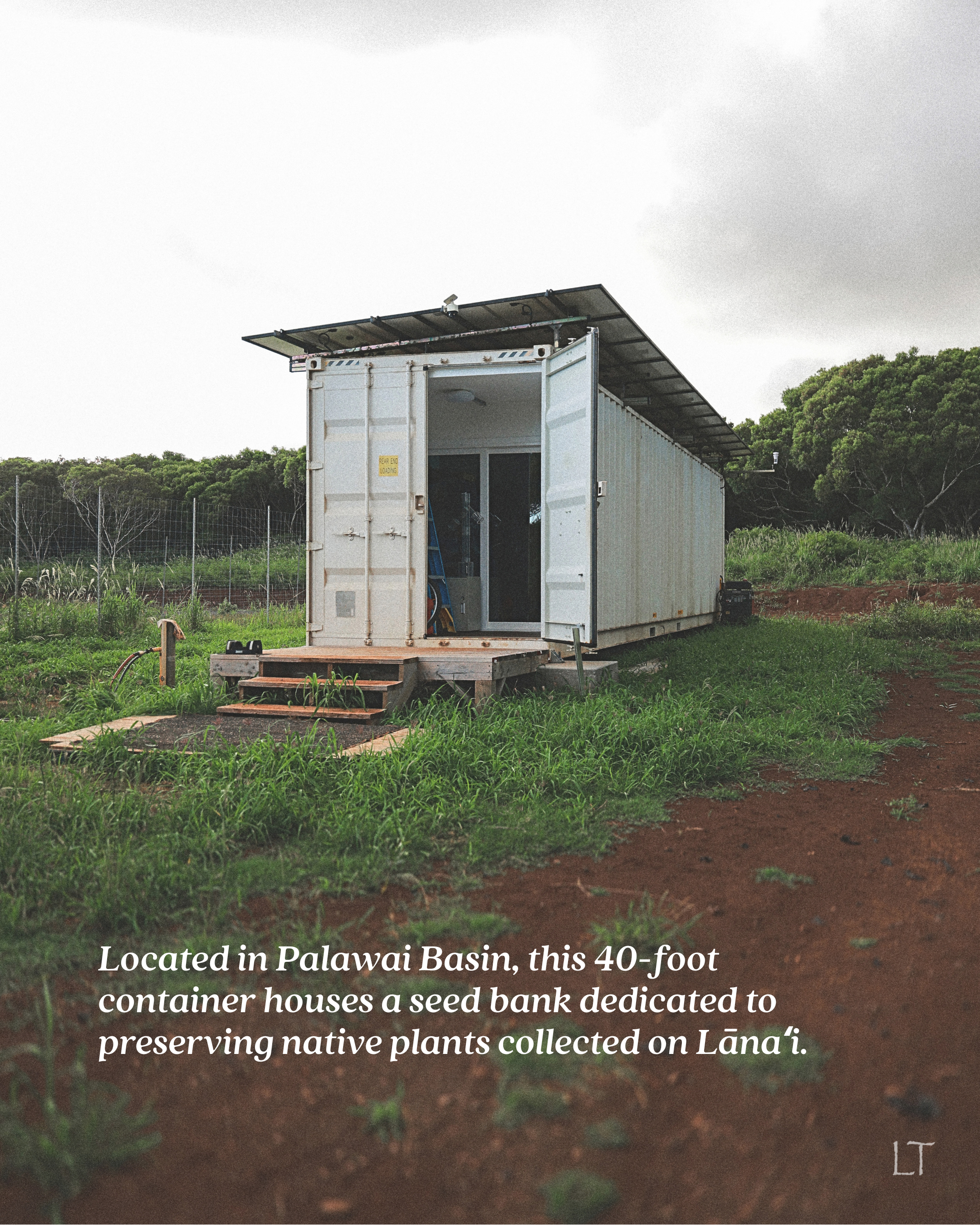
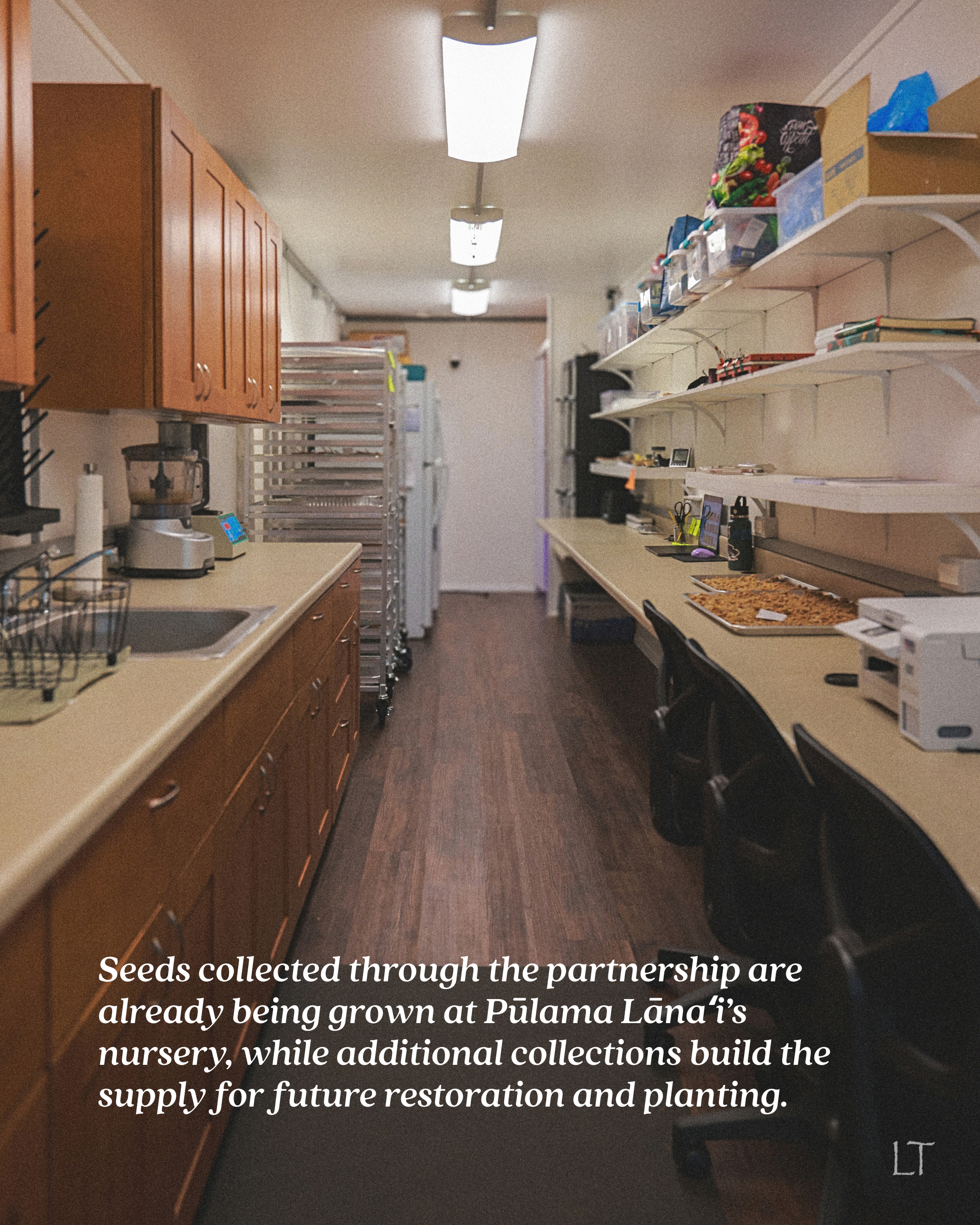
The seed bank is located in Palawai Basin, inside a 40-foot container equipped for processing and storage. The container arrived on Lānaʻi in November 2024, and Terraformation’s first collection trip followed that December. Staff have generally returned every month to month and a half, spending approximately a week gathering seeds and processing them at the facility.
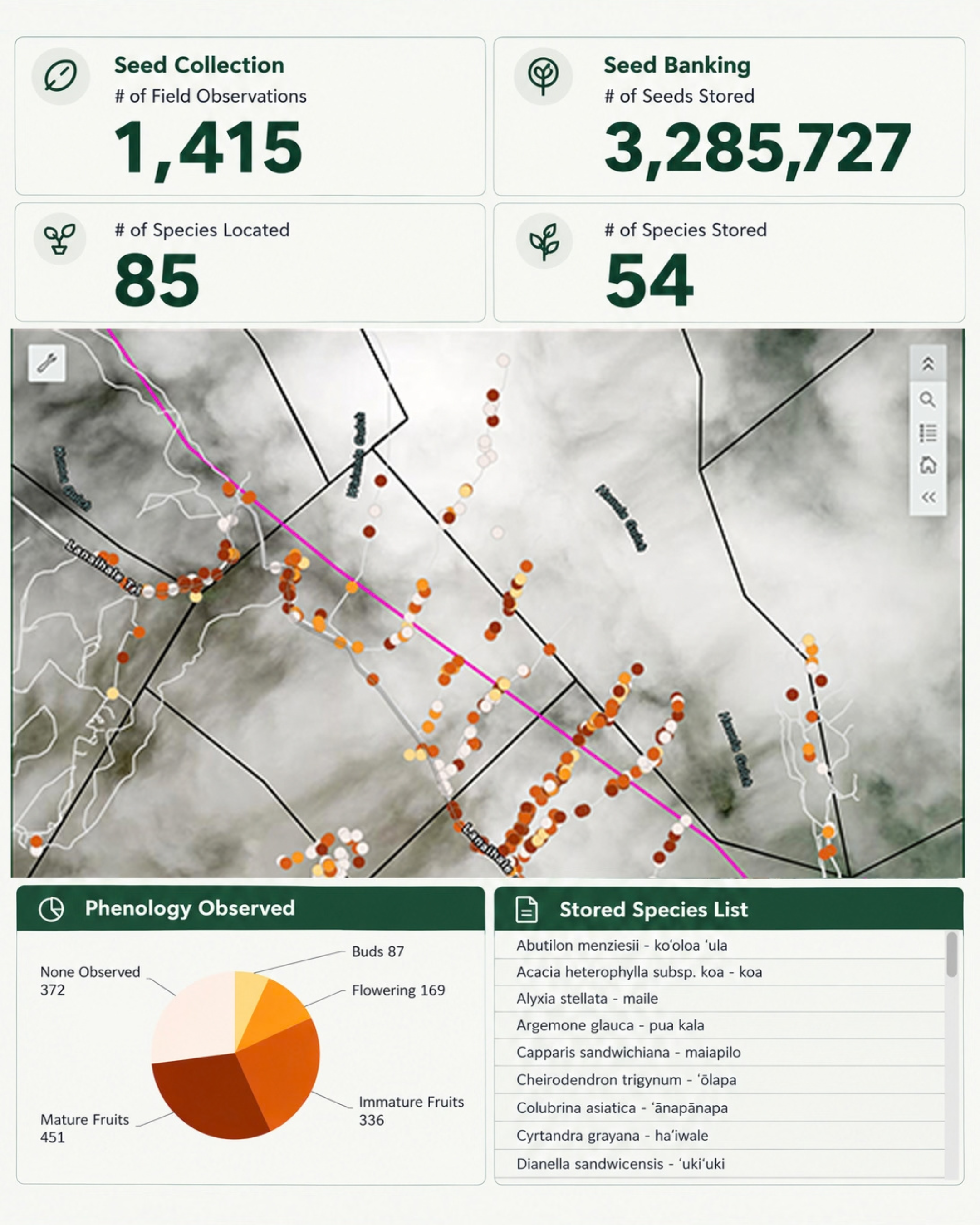
According to Todero, more than 3.3 million seeds had been collected by September 2026. Pūlama Lānaʻi estimates that approximately 15,000 seeds have been withdrawn for direct nursery use in 2026. The shared inventory included more than 56 species and more than 300 separate batches of collected seeds.
The Larger Kuahiwi a Kai Effort
The seed bank supports a broader effort to restore native vegetation and improve watershed health through the Kuahiwi a Kai program. Across approximately 20,000 acres, the program connects conservation work from mauka to makai, with goals that include protecting ʻuaʻu and other native species, reducing erosion and sediment runoff, and protecting coastal waters, reefs and cultural sites.
According to NFWF’s Hawaiʻi Conservation Program grant summaries, funding awards in 2024 and 2025 supported coastal water quality and coral reef monitoring planning, ungulate monitoring, native plant restoration planning, fencing along Kehewai Ridge, and a continuation of the resident deer and sheep management and community stewardship program led by the Lānaʻi Culture & Heritage Center.
Collecting for Genetic Diversity
Where seeds come from, and how many different plants they represent, matters as much as the total number collected.
Todero said the team gathers from different locations and returns over time to preserve genetic diversity within each species. If seeds come from only a few parent plants, the plants grown from those seeds may share the same vulnerability to drought or pests. Collecting from more parent plants increases the chance that some can withstand those threats.
The seeds collected for this project come solely from Lānaʻi and are intended for use on Lānaʻi. Todero said plants of the same species can develop different adaptations on different islands. Collecting locally retains genetic material from plants already growing under Lānaʻi’s conditions.
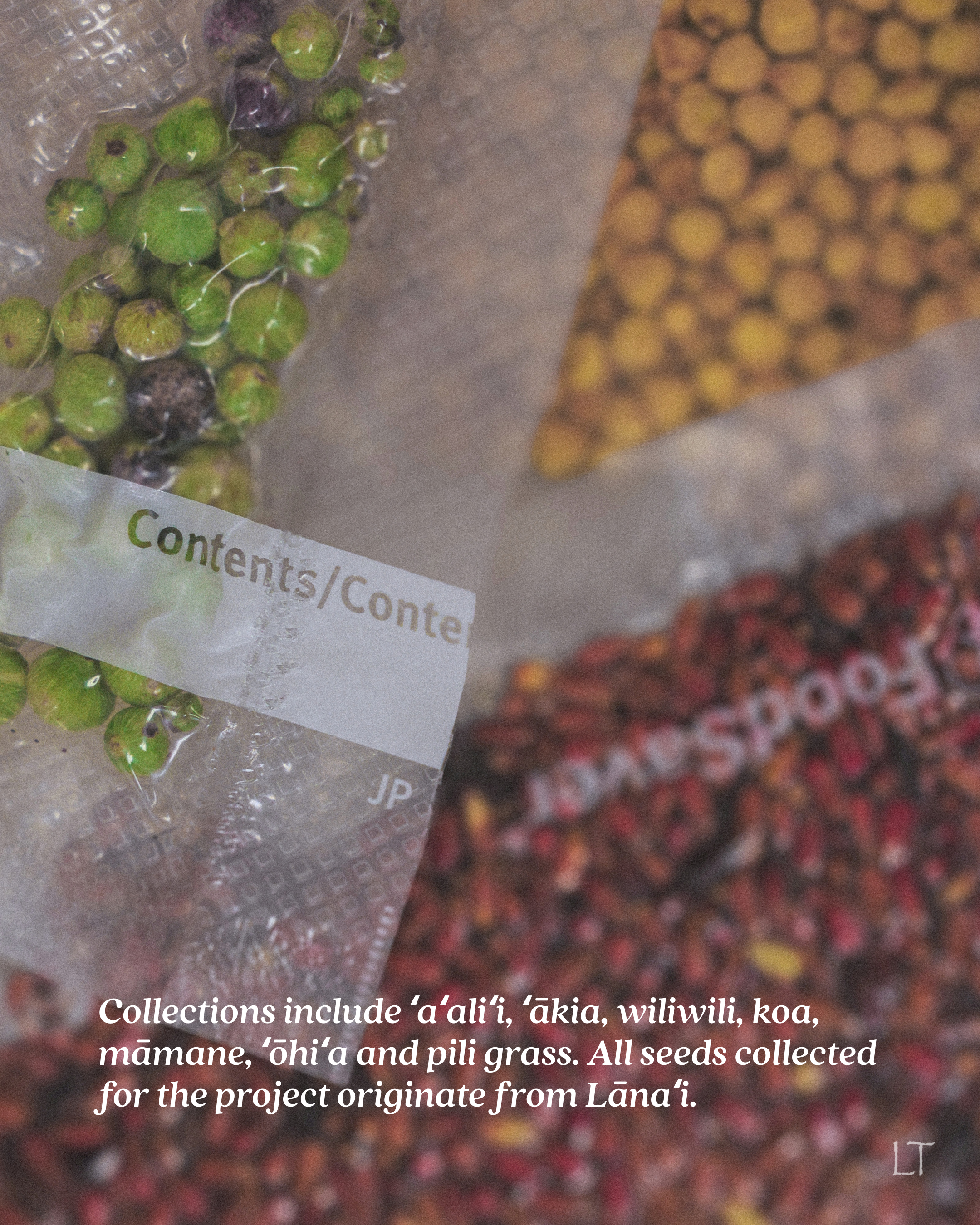
Collections include dryland plants such as ʻaʻaliʻi, ʻākia and wiliwili, along with pili grass and other species needed by the nursery.
Staff also gather other native seeds when they are available. Todero said collection protocols limit gathering to about 20 percent of the available seeds, leaving the remainder in place.
Keeping collections separate preserves information about their origins as seeds move through processing, storage and nursery use.
Inside the Seed Bank
The seed bank runs off-grid on solar power, with a backup generator for extended cloudy periods. Air conditioning and dehumidifiers maintain a cool, dry environment.
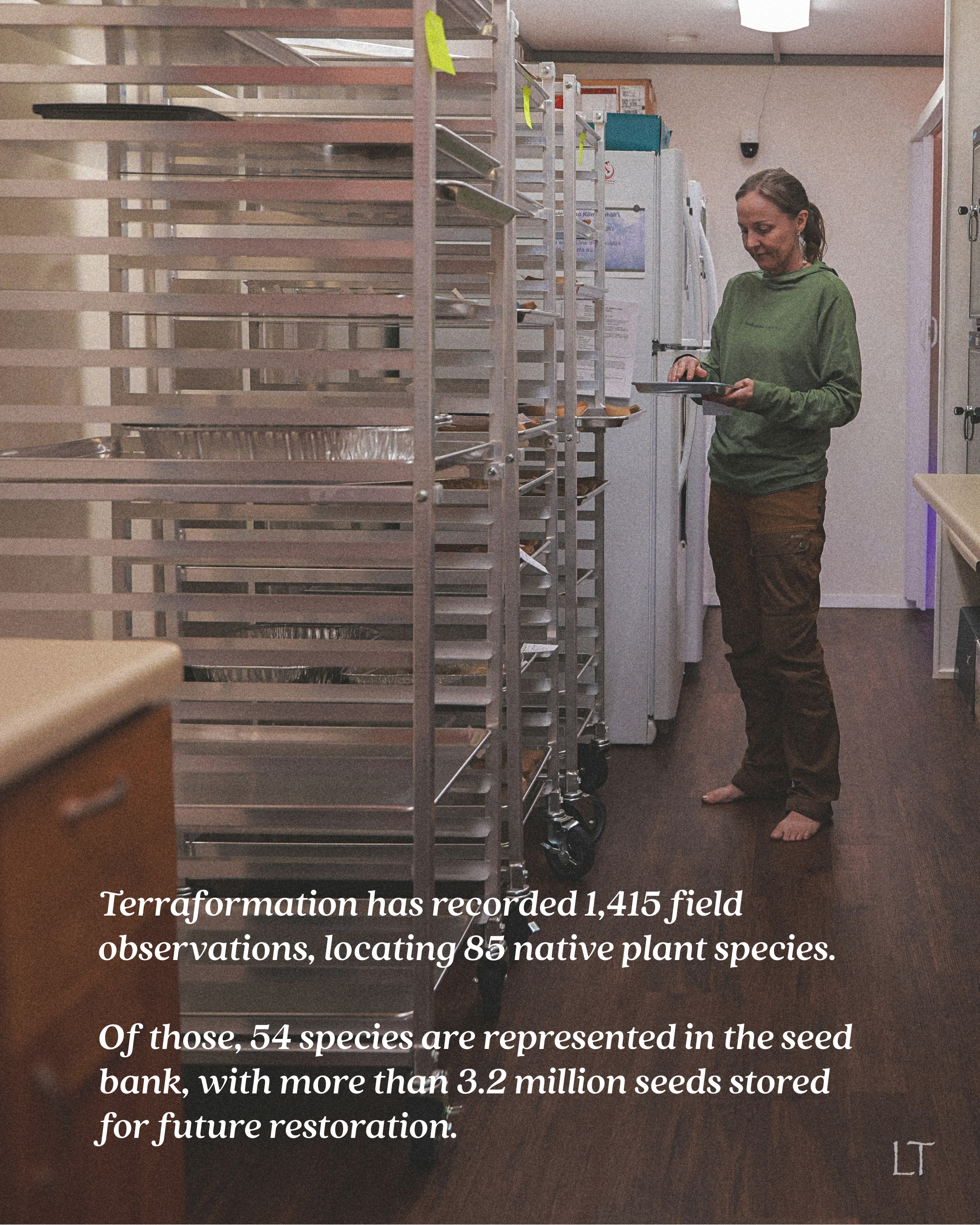
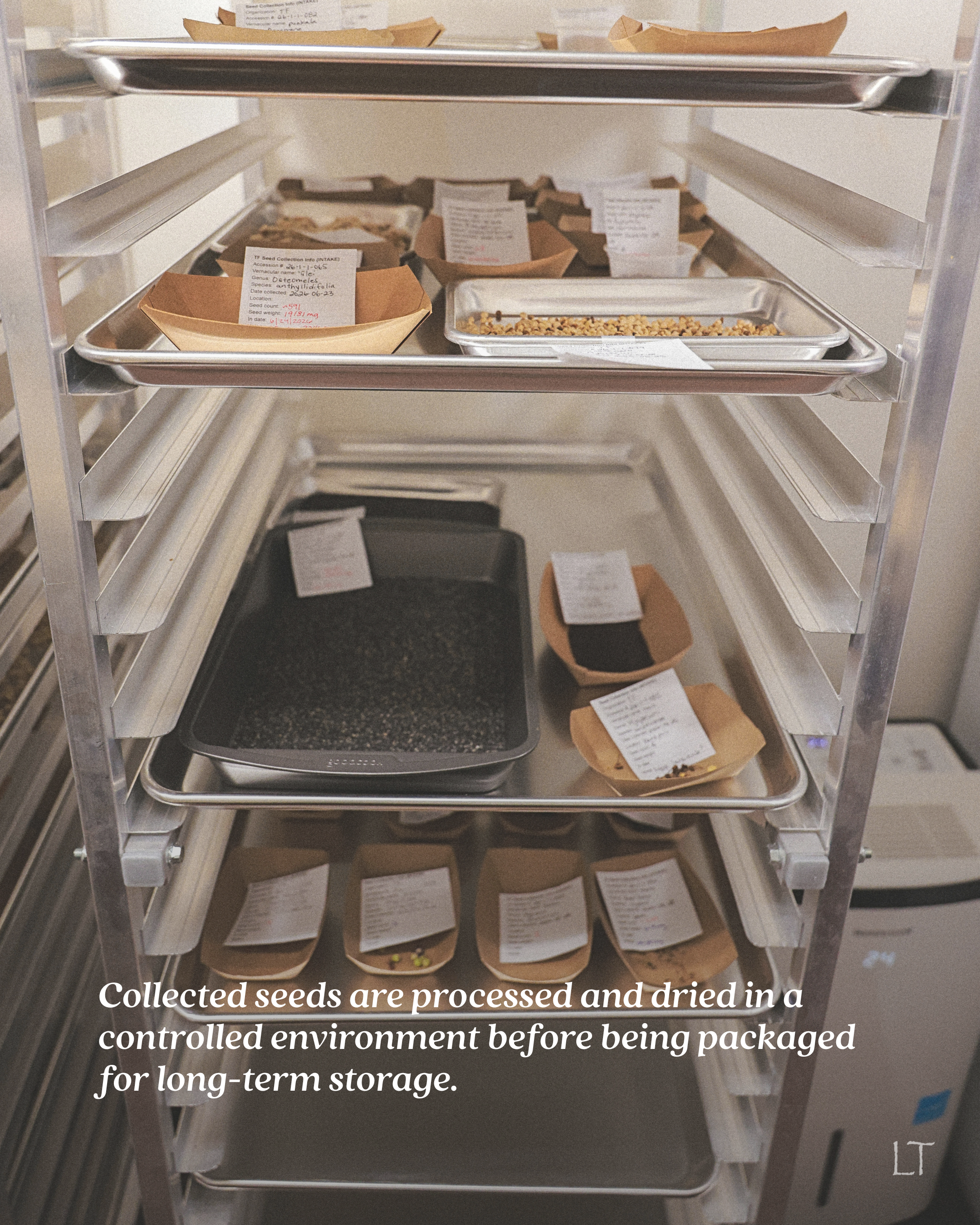
Collected seeds are processed and placed on racks to dry. When staff return, they enclose sensors in jars with the seeds to check relative humidity. The target is approximately 20 percent relative humidity before packaging and storage.
Reducing moisture helps seeds retain their ability to germinate for longer periods. The drying process generally fits the team’s monthly collection schedule.
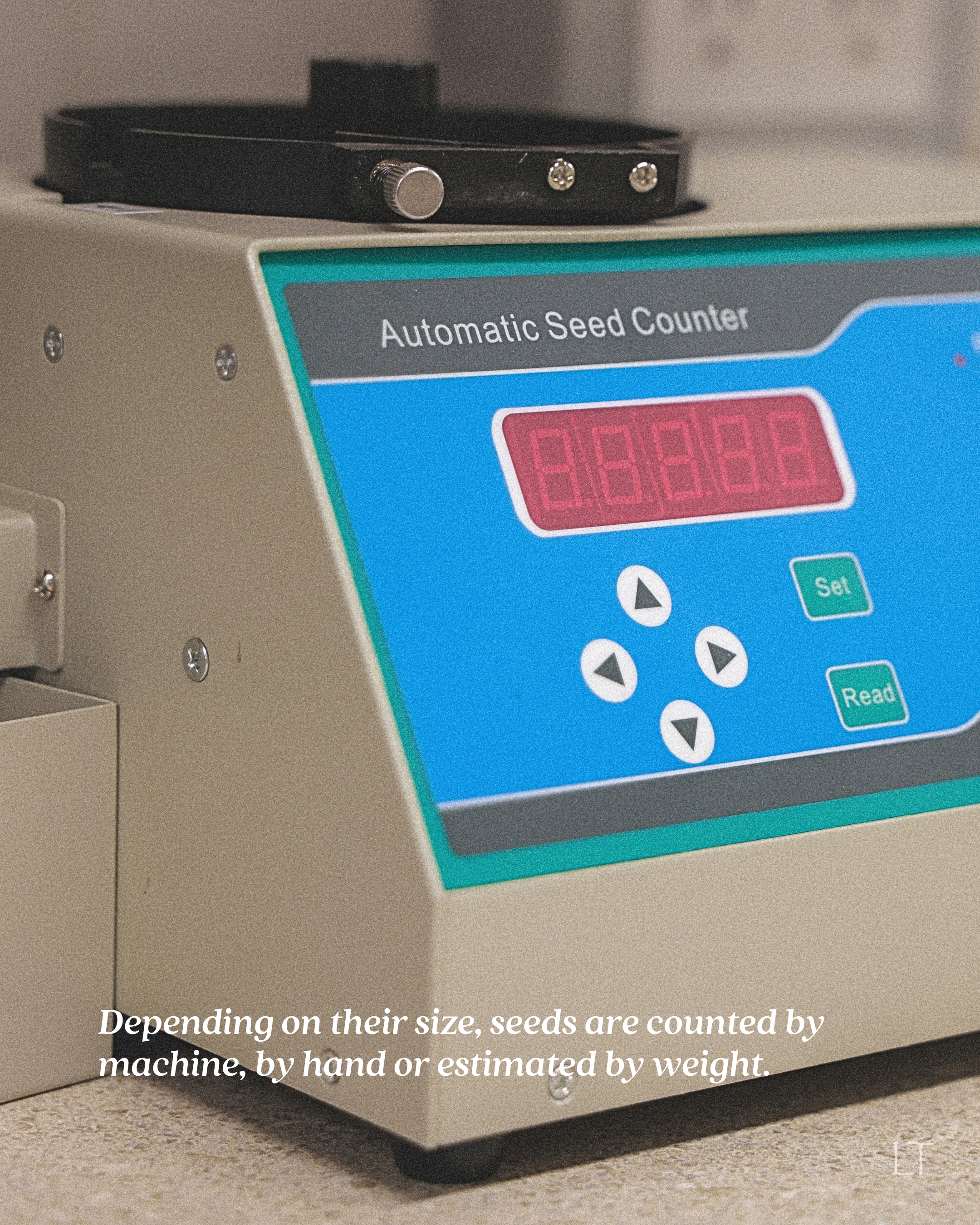
Counting methods depend on seed size. Medium-sized seeds, such as koa and māmane, can pass through a seed-counting machine, while larger seeds and small collections can be counted by hand. For tiny seeds, staff count and weigh a sample, then estimate the full collection using its weight.
Approximately 2.4 million seeds in the September inventory were ʻōhiʻa. They are small enough to be stored in folded paper envelopes, which keep them from sticking to plastic or collecting in corners.
Terraformation’s Terraware system tracks the collections through processing, storage and withdrawal.
Knowing When to Return
The fieldwork also produces a record of when native plants bud, flower and bear mature fruit.
These observations, known as phenology data, help staff plan future collections. Some plants follow recognizable seasonal patterns, while others vary with rainfall and conditions from year to year.
Pūlama Lānaʻi staff provide updates between Terraformation’s visits, helping the team determine whether seeds are ready and what the nursery needs.
The work also reflects a concern Todero described with the phrase “common until it’s not.” Collecting while plants remain abundant preserves seed before a pest or other threat reduces a population.
Todero said plant populations can decline substantially before formal endangered status or conservation funding arrives. She said seeds should be collected and preserved before populations become severely diminished.
“In my opinion, we should be doing as much as we can before we get to that point,” Todero said.
Conserving Critically Endangered Plants
According to Pūlama Lānaʻi, the seed bank also supports joint work with Terraformation to conserve 15 critically endangered native plant species. Some are found only on Lānaʻi, and some have been reduced to populations of about a dozen wild individuals.
Under a permit from the Department of Land and Natural Resources, staff coordinate observations and field visits to collect seeds when they mature. Seeds are gathered for long-term storage and local propagation to help increase these plant populations.
Rediscovering an ʻŌhiʻa Variety on Lānaʻi
Repeated field visits have also given collectors opportunities to notice plants that might otherwise be passed by.
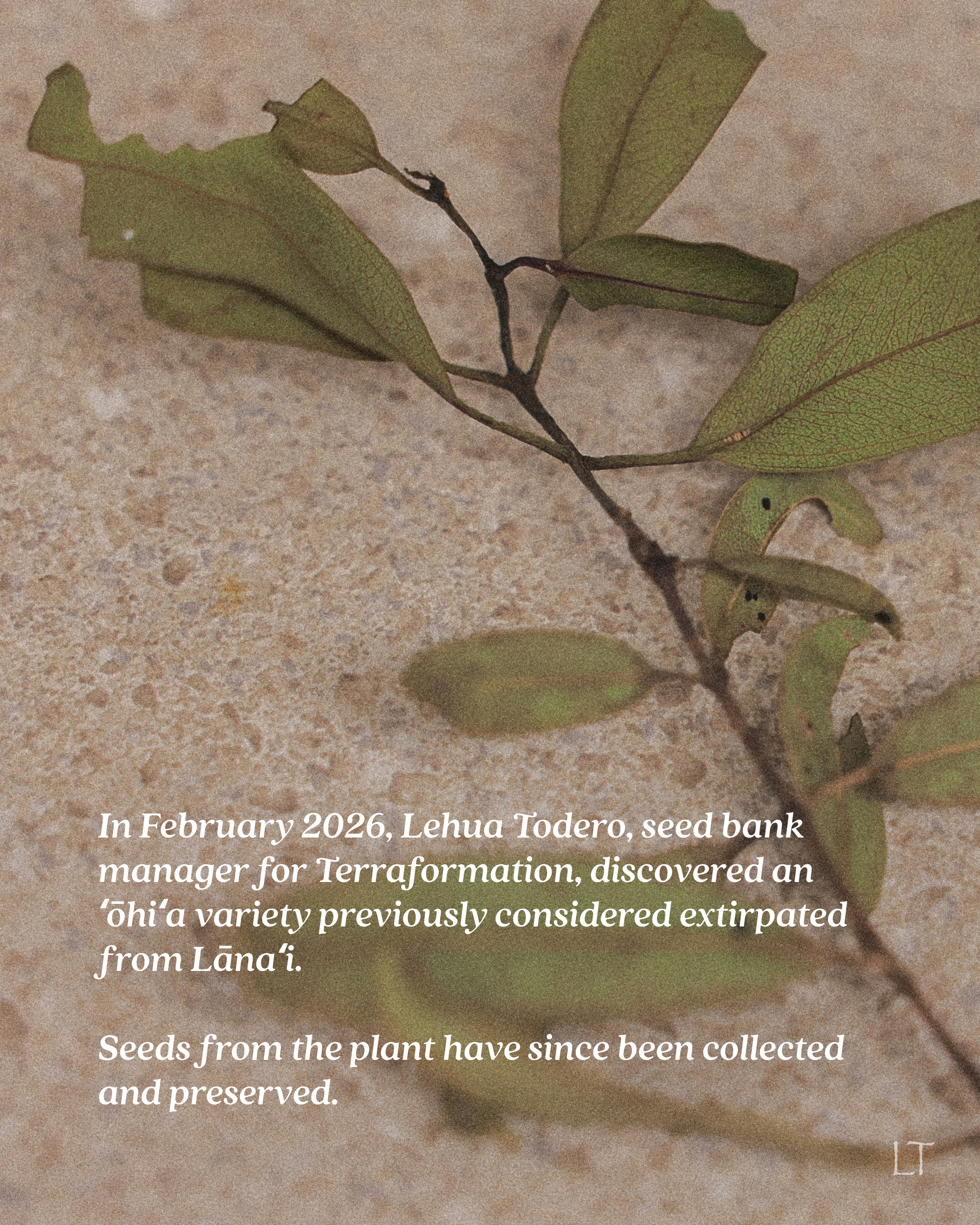
In February 2026, Todero found an ʻōhiʻa variety with unusually long leaves. After arranging the necessary clearances, she brought a specimen to Bishop Museum in July 2026.
Todero said Bishop Museum identified the specimen as Metrosideros waialealae var. fauriei, a variety previously considered extirpated from Lānaʻi. Extirpated means a species or variety has disappeared from a particular area while surviving elsewhere.
Bishop Museum’s database includes a Lānaʻi specimen collected in 1928 and lists the variety from Molokaʻi and Maui.
As of September 2026, Todero had found only one individual. Seeds from the plant had been collected and placed in the seed bank. She said the new specimen was still being processed into the museum’s records.
Continuing Under Pūlama Lānaʻi
Terraformation’s long-term goal is to hand ongoing seed collection over to Pūlama Lānaʻi, along with the information gathered through the project.
Staff from both organizations collect side by side, share the seed bank facility and coordinate around nursery needs. The accumulated field and phenology records will help Pūlama Lānaʻi plan future collections and determine when seeds are ready to collect.
Alongside restoration and conservation work, Pūlama Lānaʻi is expanding native plant production through its nursery to make native species more readily available for landscaping and community use. Seeds gathered through the partnership are already being grown in the nursery, while further collections build the supply for future planting.